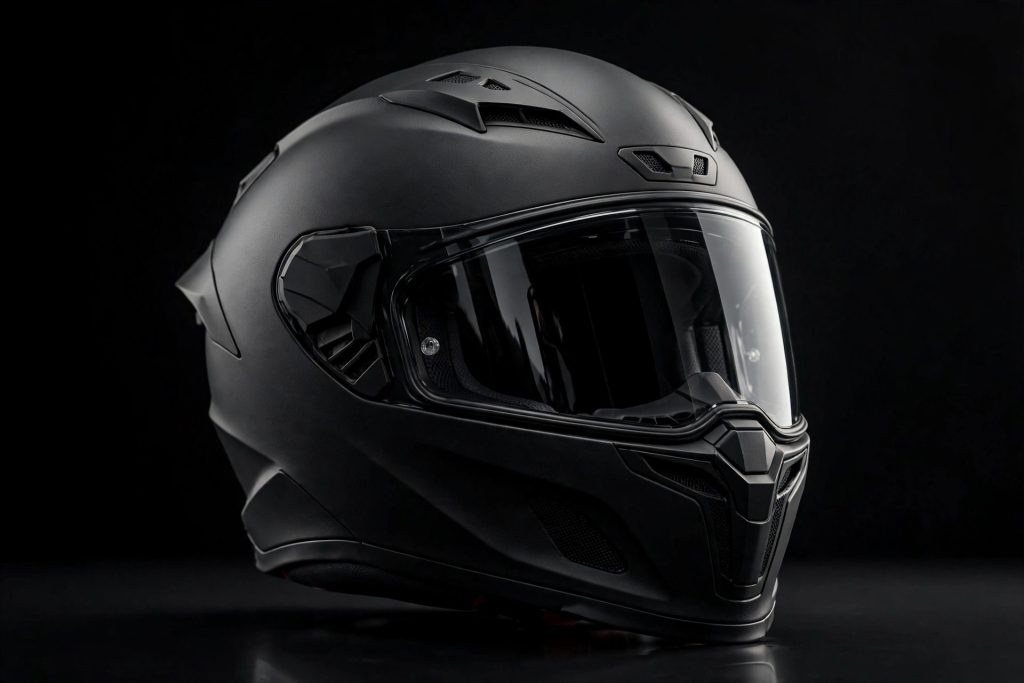
Ask experienced motorcyclists what a certain string of letters means and many will answer without hesitating. ATGATT: all the gear, all the time. It is not a brand, a law, or a slogan invented to sell jackets. It is a habit of mind shared by riders who have thought carefully about risk, and it means exactly what it says. Helmet, jacket, gloves, trousers, and boots, not just for the long tour or the fast road, but for the short trip to the shop, the gentle commute, the sunny afternoon ride where nothing is expected to go wrong. Especially for those rides, say its supporters, because that is when most crashes actually happen.
The strongest argument for the habit is a simple, uncomfortable fact: the road does not know how short your journey is. Most collisions involving motorcycles happen close to home, on familiar streets, at ordinary speeds, on trips the rider has made a hundred times. Familiarity relaxes attention, other drivers are not expecting a motorcycle at the quiet junction near your street, and loose gravel, oil, a dog, or a driver glancing at a phone needs no motorway to cause trouble. Riders often dress for the destination: shorts for the beach, smart shoes for the office, a light shirt for a summer evening. The gear habit asks you to dress instead for the small possibility you do not want to think about, the one that arrives without asking how far you were going.
The second argument is about what actually injures riders. People imagine motorcycle injuries as dramatic high-speed events, but a great deal of the everyday harm is more ordinary: skin ground away in even a slow slide across tarmac, a broken ankle from a bike falling at walking pace, a smashed hand that reached out automatically to stop a fall. Denim offers about as much protection as tissue paper once you are sliding. Ordinary trainers fly off, expose ankles, and leave feet to do the braking. Bare hands are injured in almost every fall because putting them out is instinct, not choice. Proper gear is built precisely for these unglamorous moments. Abrasion-resistant material stays between you and the road. Armour softens the knock on elbows, shoulders, knees, and back. Boots hold your ankle together and stay on your feet. Gloves let your instinctive hands survive their own reflex. A helmet, the one item most riders already accept, protects the one injury you cannot recover from being careless about.
Opponents of the habit rarely argue that gear does nothing. They argue that it is hot, expensive, inconvenient, and unnecessary for a careful rider. Each point deserves an honest answer. Modern gear has changed enormously. Mesh jackets flow air like a T-shirt while still carrying armour, lightweight armoured jeans look like ordinary jeans, and short riding boots resemble trainers. Heat is a real problem in some climates, but it is now a solvable shopping problem rather than a reason to ride unprotected. Cost is real too, yet gear can be bought piece by piece, second hand in many cases, and it should be weighed against the cost of the bike itself and the far greater cost of weeks off work with road rash. As for careful riding, it reduces risk enormously and every ATGATT rider believes in it. It simply cannot control the other driver. Gear is the layer of protection that remains when skill, attention, and luck have all done their best and it still was not enough.
There is also a quieter benefit that riders mention once the habit forms: gear changes how you ride. Putting it on is a small ritual that shifts your mind from errands and distractions into riding mode. You feel more professional, more deliberate, and for many people, more calm. The jacket and gloves become like a seatbelt in a car, something whose absence feels wrong once you are used to it. Passengers matter here too. If the habit is truly for every ride, it includes the friend or partner on the back, who deserves the same protection you give yourself and who usually has even less control over what happens.
None of this means gear makes anyone invincible, and honest riders are the first to say so. It will not cancel out reckless speed, alcohol, or showing off. Think of it instead as the difference between a bad day and a life-changing one. Crashes will always be frightening and sometimes serious. The question the habit asks is smaller and more practical: if today is the day something unexpected happens two streets from home, what do you want between you and the road? Most riders, given a moment to picture it clearly, give the same answer. Everything they own.